| |
| |
|
Editorial
May we take this opportunity to wish you a very happy Christmas and prosperous 2026!
We're delighted to share that, for the fourth consecutive year, ESCP Business School is ranked among the top 5 business schools in Europe according to the 2025 Financial Times ranking. Securing 4th place out of the top 100 schools, this achievement showcases the strength of our School's unique pan-European model and human-centred approach to innovative business education. More details can be found here.
Earlier this year, our MSc in Energy Management (MEM) was re-accredited by the Energy Institute (EI) until 2029 as a Learning Affiliate Member. This recognition highlights the strength and relevance of our curriculum, our commitment to academic excellence, and our close alignment with industry needs - reaffirming ESCP’s commitment to shaping the next generation of energy leaders. Read more here.
Research:
In case you missed it, you can find below recent research by our EMC Experts and MSc in Energy Management students on energy poverty, concentrated solar heat, modular nuclear power plants and other relevant topics.
Energy Programmes at ESCP:
Admission process for the 2026 intake of our MSc in Energy Management (MEM) is open. To find out more about the specialisation, please click here.
Our new Executive Master in Future Energy is accepting applications for the February 2026 intake. For more information on the programme, please click here.
Finally, to keep up-to-date on all activities at the Centre, we invite you to join our LinkedIn group, Energy Management @ ESCP Business School.
|
| |
|
| |
|
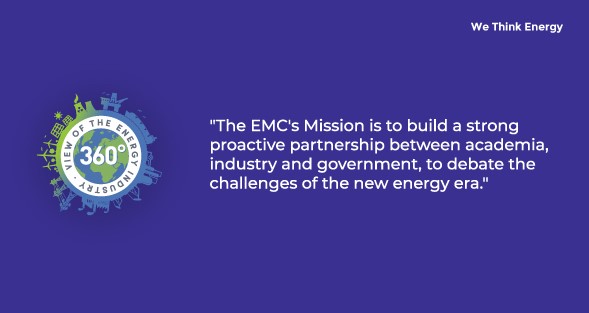
Our Mission
|
|
|
The EMC Advisory Board
|

The EMC Advisory Board is comprised of top energy experts from the world's industry leaders in both the public and private sectors.
- The curriculum of the MSc in Energy Management, ensuring the specialisation meets the needs of participants on academic and professional levels.
- Research that makes significant impact on best business practices.
- Current and future activities which benefit the EMC's partners, affiliates, students and alumni.
|
|
|
|
Energy Programmes
|
London - Paris - Internship
|
|

|
|
|
Latest News
|
Tuesday, December 16, 2025
Tuesday, November 25, 2025
ESCP Business School and its Energy Management Centre (EMC) are delighted to announce the appointment of the new Energy Society board members for the 2025–2026 term.
Elected by the dynamic twelfth cohort of MSc in Energy Management (MEM) students, this talented team is ready to lead an engaging and ...
|
|
|
Research
|
Published Papers
Highlights
• Evaluating energy poverty across a sample of 32 economies from 2004 to 2021.
• Data from the EU-SILC database and Eurostat were utilised.
• Fixed-effect regression models were used to identify factors influencing energy poverty at the household level.
• Strategies for addressing energy poverty include enhancing housing conditions and lowering electricity expenses.
• Households that are low-income, smaller in size, and in poor condition are more vulnerable to energy poverty.
Abstract
The domain of energy poverty is increasingly recognised as a multifaceted global challenge stemming from limited income, high energy costs, and inefficient housing. The issue affects different social groups and regions unevenly, even within Europe. This paper investigates energy poverty across 32 economies, including EU member states and several non-EU European countries, over the period from 2004 to 2021. By analysing micro-level data from the EU-SILC database and Eurostat, the study identifies that low-income households, smaller households, and those living in overcrowded conditions are particularly vulnerable to energy poverty. Interestingly, the research finds that renewable energy does not contribute to alleviating energy poverty in Europe. Based on these results, the study calls for immediate policy measures to improve housing conditions and lower electricity costs, especially for economically disadvantaged households, to effectively address energy poverty.
|
Georgia Makridou, Ken’ichi Matsumoto, Michalis Doumpos
|
READ MORE
|
Published Papers
Green roofs are artificial ecosystems that provide a nature-based solution to environmental challenges such as climate change and the urban heat island. Green roofs aid in the conservation of both cooling and heating energy; deposition of particulates and mitigation of air pollution; control of runoff and water pollution; promotion of biodiversity; and provision of aesthetic and health benefits. This research is a holistic review of the green roof literature and provides a global perspective of the subject with a classification of modelling studies; and an extensive review of contributions to energy conservation, carbon sequestration, mitigation of air pollutants, runoff control; and urban noise reduction. The review covers the system’s thermal performance modelling through several methodologies; experimental studies; parametric studies to assess the impact of various parameters on the system’s energy efficiency using several configuration parameters such as leaf area, foliage height and density, plant coverage, roof insulation, soil thickness, and irrigation; energy benefits; and environmental benefits including air pollutants mitigation, carbon sequestration, runoff control and urban noise reduction. Finally, review was complemented with a life cycle assessment study of green roofs, which examined the extraction of raw materials, manufacturing and construction, transportation, and disposal.
|
Giouli Mihalakakou, Manolis Souliotis, Maria Papadaki, Penelope Menounou, Panayotis Dimopoulos, Dionysia Kolokotsa, John A. Paravantis, Aris Tsangrassoulis, Giorgos Panaras, Evangelos Giannakopoulos, Spiros Papaefthimiou
|
READ MORE
|
|
|
EMC Working Papers
Decarbonising Steam: A Strategic Imperative for the Oil Refining Sector
Steam is the lifeblood of petroleum refineries, powering turbines, heating, and driving critical processes—yet generating it consumes up to 30% of a refinery's energy and accounts for roughly a third of its greenhouse gas emissions. Conventional steam production, reliant on fossil-fuelled boilers, is challenging to decarbonise without significant capital expenditures, and rarely yields meaningful emission reductions. With such a sizable environmental footprint, the pressing challenge is clear: how can refineries sustainably produce steam at scale? This article explores a compelling answer—concentrated solar thermal (CST)—and evaluates its potential to transform Colombia’s refinery sector, making efficiency and sustainability not just aspirational goals, but achievable realities.
EMC Working Papers
1. Introduction
The European Union (EU) is navigating a transformative period in its energy landscape, driven by the urgent necessity to tackle climate change and ensure sustainable energy security. As the world increasingly recognizes the dangers of climate disruption, the EU has positioned itself at the forefront of global efforts to reduce carbon emissions and foster a clean energy transition. In line with the ambitious European Green Deal, which aims to make Europe the first climate-neutral continent by 2050, the EU has set a bold target: achieving at least 42.5% renewable energy consumption by 2030, with aspirations to reach 45% [1]. Here's a concise summary of the current and upcoming trends in renewable energy demand and requirements across Europe. One of the upcoming requirements for Europe is the need to address seasonal variations in renewable energy production. Renewable sources, such as wind and solar, are inherently intermittent, leading to fluctuations in energy supply. This intermittency poses challenges to grid stability and energy security, especially during periods of low wind or solar generation. Converting offshore wind energy into hydrogen for storage can provide a flexible and reliable solution for energy supply, especially during periods when wind production is low or when demand peaks. Conveying current trends of renewable energy demand and upcoming trend requirements using Europe’s electricity base load with modular nuclear power plants, an Ultra High Voltage Transmission Line is used to transfer renewable energy long distances. Converting offshore wind production may concentrate on hydrogen storage in seas for upcoming seasonal issues caused by renewable energy, and finally Vertical Integration, Customer-centric, acquiring the energy from suppliers through Power Purchasing Agreements (PPAs).
|
|
|
| |
|